

Description
Product Overview
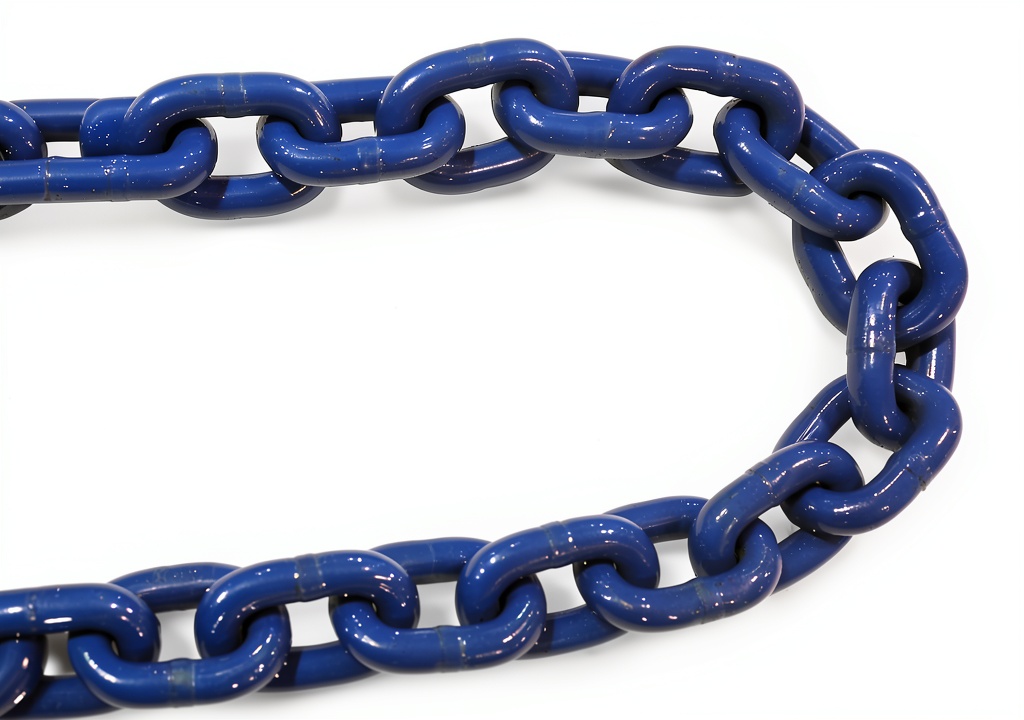
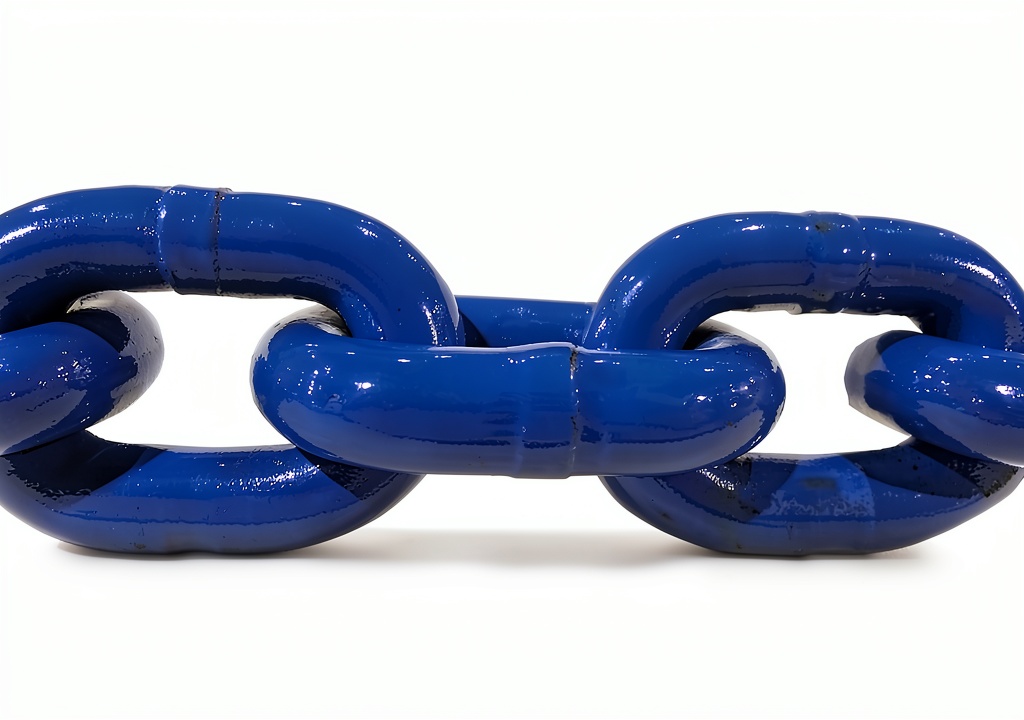
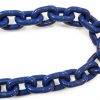
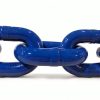
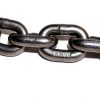
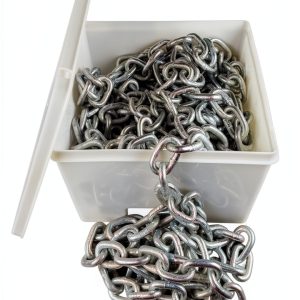
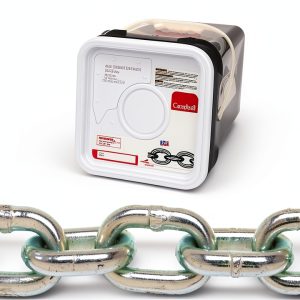
The 3/8″ Grade 100 lifting chain from Rigging is engineered to meet the demanding requirements of modern construction and heavy‑duty material handling. Constructed from high‑grade alloy steel, the chain conforms to ASTM A973 specifications, guaranteeing consistent strength and durability across its full 8 ft length. With a working load limit of 8,800 lb and a maximum break capacity of 35,200 lb, this chain provides a reliable safety margin for a wide range of rigging tasks. The precision‑machined links feature a polished finish that resists corrosion and reduces wear, extending the service life even in harsh outdoor environments. Each link is heat‑treated to enhance tensile strength, ensuring that the chain maintains its performance over repeated cycles of loading and unloading. The compact weight of 1.62 lb makes the chain easy to handle, transport, and install without sacrificing structural integrity.
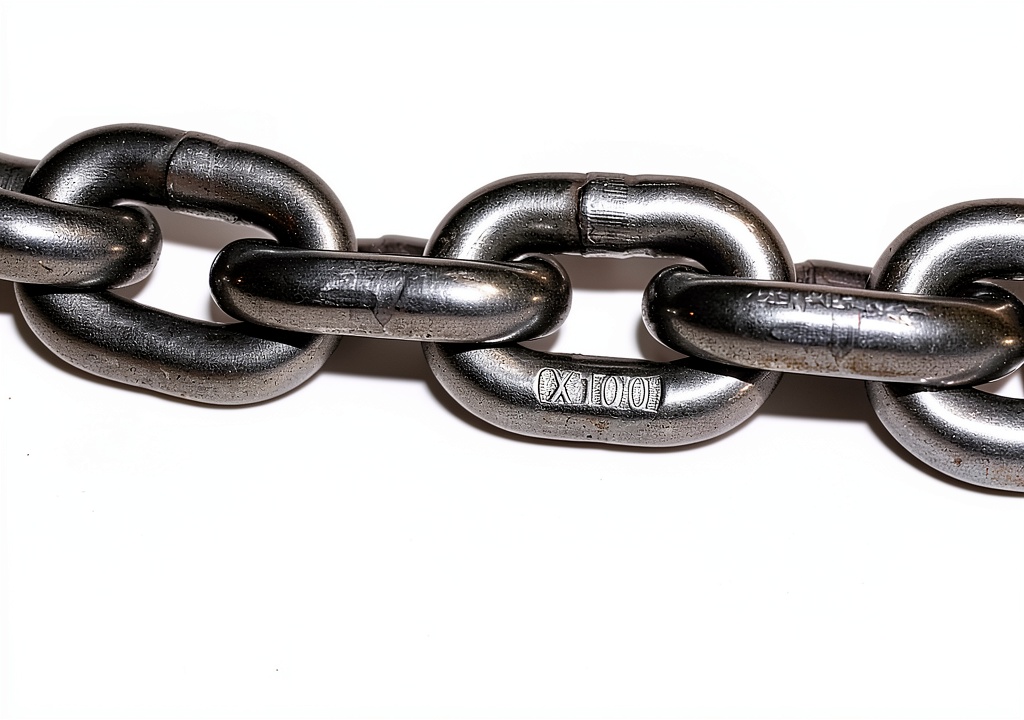
In addition to its impressive load ratings, the chain’s 3/8″ diameter provides a balance of strength and flexibility, allowing it to bend around pulleys and hooks without compromising safety. The links are sized to fit standard rigging hardware, making integration with existing equipment straightforward. The chain’s surface is treated with a phosphate coating that further protects against rust and chemical exposure, a critical feature for operations near salt water or in industrial settings where moisture and chemicals are prevalent. Users appreciate the clear marking of the working load limit on each link, which simplifies inspection and compliance with safety regulations on job sites.
Installation of the 3/8″ Grade 100 chain is straightforward thanks to its standardized link dimensions and clear WLL markings stamped on each link. Operators can quickly attach the chain to eye bolts, hooks, or swivel fittings using a simple slip knot or a quick‑release connector, reducing setup time on busy job sites. The chain’s flexibility allows it to be routed around pulleys and sheaves without excessive bending stress, preserving its structural integrity. Rigging also supplies a detailed installation guide that outlines best practices for load distribution, angle considerations, and proper tensioning, helping users achieve optimal performance while adhering to OSHA and ANSI safety regulations.
The chain complies with CE marking requirements and has been tested according to EN 818 standards for lifting accessories, providing assurance that it meets European safety criteria. Rigging also offers optional training sessions for site personnel, covering proper chain handling, inspection techniques, and load calculation methods. By educating workers on best practices, the risk of misuse is minimized, leading to safer operations and longer equipment lifespan.
Customers can request custom lengths or specific link configurations to match unique rigging setups, with the same grade 100 material and testing standards applied to each custom order. Rigging’s engineering department works closely with clients to develop solutions that meet exact dimensional requirements, ensuring seamless integration with existing equipment. Custom orders are processed with the same quality controls, guaranteeing that performance and safety are never compromised.
The chain meets the requirements of the International Organization for Standardization (ISO) 9001 and ISO 14001, reflecting Rigging’s commitment to quality management and environmental responsibility. Independent third‑party audits verify that each production batch adheres to these standards, providing customers with documented proof of compliance. This dual certification framework assures that the chain not only delivers mechanical performance but also aligns with best practices for sustainable manufacturing.
Usage
The 3/8″ Grade 100 chain is ideally suited for excavator towing, where its high working load limit allows operators to safely pull heavy equipment across rough terrain. Its 8 ft length provides sufficient reach to connect to the excavator’s hitch while maintaining a safe distance for the operator. The chain’s flexibility enables it to navigate around obstacles such as rocks, debris, or uneven ground, reducing the need for additional rigging components. When used in construction rigging, the chain can secure loads on scaffolding, lift steel beams, or serve as a tie‑down for modular units during transport.
Beyond heavy equipment, the chain is an excellent choice for general material handling in warehouses and shipyards, where its corrosion‑resistant coating prolongs service life despite exposure to salty air or industrial chemicals. Workers can quickly attach the chain to standard hooks, eye bolts, or shackles, streamlining the process of moving pallets, containers, or large machinery. The chain’s predictable performance under load also makes it suitable for safety‑critical applications such as anchoring temporary structures or stabilizing loads during lifting operations on offshore platforms.
In offshore oil and gas platforms, the chain’s corrosion‑resistant coating and high load capacity enable safe anchoring of equipment and securing of cargo during vessel transfers. The 8 ft length offers sufficient reach to connect to deck winches while maintaining a safe clearance from moving machinery. Operators appreciate the chain’s ability to absorb shock loads caused by wave motion, reducing the risk of sudden failure and protecting valuable assets.
For mining operations, the chain can be employed to secure haul trucks, lift ore bins, and assist in the movement of heavy drilling rigs across uneven terrain. Its robust construction tolerates abrasive dust and rock particles, while the phosphate coating minimizes the impact of moisture and chemicals commonly found in underground mines. The chain’s predictable elongation under load ensures that lifting points remain stable, improving operator confidence and overall site safety.
Automotive manufacturers use the chain for positioning heavy chassis components during assembly lines, where precise control and repeatable performance are essential. The chain’s ability to maintain consistent tension under cyclic loading helps prevent slippage, ensuring that large body panels remain aligned throughout welding and painting processes. Its corrosion‑resistant finish also suits the high‑humidity environments of paint shops, reducing maintenance downtime.
Rail maintenance crews rely on the chain to secure heavy rails during replacement or alignment tasks. Its high tensile strength prevents stretching under the weight of steel rails, while the 8 ft length offers enough reach to connect to lifting hooks positioned away from the track. The chain’s durability under repetitive loading makes it ideal for daily use in rail yards, where efficiency and safety are paramount.
Why Choose Us
Rigging’s commitment to quality begins with the selection of premium alloy steel that meets stringent ASTM A973 standards, ensuring each link delivers the tensile strength required for demanding industrial tasks. Our manufacturing process includes precision forging, heat treatment, and a final phosphate coating that together create a chain that resists fatigue, corrosion, and wear over years of service. By adhering to rigorous testing protocols, we verify that every batch of chains achieves the advertised working load limit and break capacity, giving customers confidence in the reliability of their rigging equipment.
Our after‑sales support team is available to assist with product selection, installation guidance, and troubleshooting, ensuring that you get the most out of your investment. We provide detailed technical documentation, including load charts and safety guidelines, which help engineers and site supervisors maintain compliance with OSHA and industry standards. In addition, Rigging offers a warranty program that covers manufacturing defects, giving you peace of mind and reducing downtime in the event of unexpected issues.
Customers in the construction, mining, and maritime sectors trust Rigging’s chains because they consistently perform under extreme conditions, from freezing temperatures to high‑temperature furnace environments. The chain’s design minimizes elongation under load, preserving the geometry of rigging setups and preventing the need for frequent adjustments. This reliability translates into faster project timelines, lower labor costs, and enhanced safety for crews who rely on dependable lifting equipment every day.
Rigging places a strong emphasis on sustainability, sourcing alloy steel from suppliers that adhere to environmentally responsible mining practices and recycling scrap metal whenever possible. This approach reduces the carbon footprint associated with raw material extraction and aligns with the growing demand for greener construction solutions. Customers benefit from a product that not only performs reliably but also supports corporate environmental goals.
Our engineering team continuously evaluates feedback from field applications to refine the chain’s design, introducing improvements such as optimized link geometry for smoother movement and enhanced load distribution. This iterative development process ensures that each new production run incorporates the latest advancements, keeping Rigging’s lifting chains at the forefront of performance and safety. By choosing our chain, you gain access to a product that evolves with industry needs.
Rigging maintains a global network of distributors and service centers, ensuring that customers receive prompt assistance regardless of location. Whether you operate in North America, Europe, or Asia‑Pacific, local partners can provide spare parts, technical advice, and on‑site support to keep your operations running smoothly. This worldwide presence reduces lead times and simplifies logistics, giving you confidence that the chain will be available whenever your projects demand it.
Beyond the initial purchase, Rigging provides a comprehensive after‑sales program that includes routine maintenance recommendations, on‑site inspections, and a dedicated hotline for urgent technical queries. Clients can schedule annual performance reviews to assess wear patterns and receive advice on extending the chain’s service life. This proactive approach helps prevent unexpected failures and supports continuous operational efficiency.
Looking ahead, Rigging invests in research on advanced materials such as high‑strength, low‑alloy (HSLA) steels and composite link designs that could further reduce weight while maintaining load capacity. Ongoing collaborations with universities and industry partners aim to develop next‑generation rigging solutions that incorporate smart sensors for real‑time load monitoring. Customers who adopt these emerging technologies will benefit from increased safety margins, predictive maintenance capabilities, and enhanced operational insight.
Key Features
- High‑grade alloy steel construction meets ASTM A973 standards, delivering exceptional tensile strength and long‑term durability for demanding industrial applications.
- 8 ft length provides ample reach while maintaining a compact 1.62 lb weight, making the chain easy to transport, position, and install on site.
- Working load limit of 8,800 lb and break capacity of 35,200 lb give a generous safety margin for heavy‑duty towing and lifting tasks.
- Phosphate coating protects against rust and chemical exposure, extending service life in harsh environments such as coastal sites or industrial plants.
- Dedicated customer support and warranty coverage ensure quick assistance and peace of mind, reducing downtime and protecting your investment.
FAQ
What is the recommended inspection interval for this lifting chain?
Inspect the chain before each use and perform a full visual examination at least once a month, checking for wear, deformation, or corrosion. Replace any damaged links immediately.
Can the chain be used with standard shackles and hooks?
Yes, the 3/8″ diameter links are compatible with most standard rigging hardware, including shackles, eye bolts, and swivel hooks, allowing easy integration into existing setups.
What is the difference between working load limit and break capacity?
The working load limit (WLL) is the maximum safe load the chain can support during normal operation, while the break capacity is the load at which the chain will fail. The WLL is typically one‑fourth of the break capacity.
Does the chain come with a warranty?
Rigging provides a one‑year warranty covering manufacturing defects. Contact our support team with the purchase details to initiate a warranty claim if any issues arise.
How should the chain be stored when not in use?
Store the chain in a dry, sheltered area away from direct sunlight and chemicals. Hang it on a rack or coil it loosely to prevent kinks, and keep it protected from sharp objects that could damage the links.
Can the chain be used in fire‑resistant applications?
While the alloy steel chain offers high strength, it is not specifically rated for fire‑exposed environments. For fire‑resistant rigging, select chains that are certified for such conditions, and consult the manufacturer’s guidelines.
Reviews
There are no reviews yet.